Ethereum basics
What an Ethereum block tells you
Follow the parent hash, transaction list, and gas usage to understand one block in context.
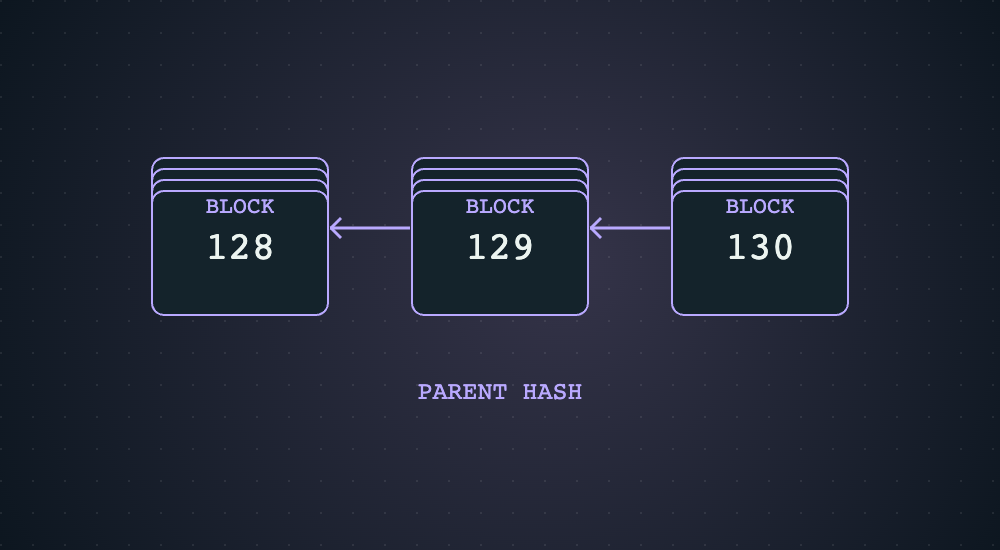
A block explorer lets you zoom out from one transfer to the batch of transactions that contained it. Select the block number on a transaction page. You will see information about the batch as well as a list of its transactions.
Follow the parent hash
A block number describes a position in the chain. The block hash identifies a particular block at that position. Its parent hash points to the preceding block. Compare that parent hash with the previous block’s hash to follow the link yourself.
Read the transaction list in order
Transactions in a block have an order. That matters because one transaction can change a balance or contract state that another transaction uses later. Two transactions with the same block timestamp can still have different positions in the list.
Compare work as well as count
Suppose one block contains many simple payments and another contains fewer, more complex contract calls. The block with fewer transactions can still use more gas. Look at gas used alongside the gas limit to understand how much execution capacity the block consumed.
Further reading: Ethereum documentation on blocks.