Exchange trends
Where stablecoins show up in business payments
Visa’s card data and Coinbase’s USDC balances tell two different stories about how businesses use digital dollars.
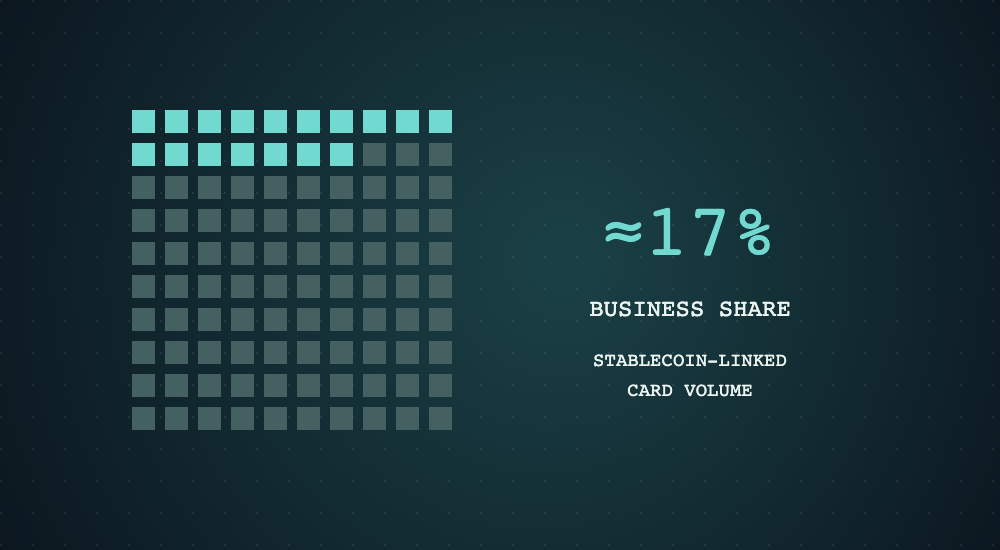
On October 1, 2026, Visa reported that business and commercial programs accounted for about 17% of its stablecoin-linked card volume in its fiscal year to date. The denominator matters. This is a share of activity in a particular set of Visa card programs. Applying it to all business payments would give the figure a much broader meaning than Visa reported. Visa’s business payments release
Follow one hypothetical expense
Imagine a company funds a card program from a stablecoin balance and an employee pays a hotel bill. From the employee’s perspective, this is a card purchase. The company’s funding asset and the currency the merchant receives can differ. A stablecoin-linked card purchase alone does not establish that the hotel received tokens or even held a crypto wallet.
A balance answers a different question
In its October 29 earnings release, Coinbase reported $22 billion of average USDC held in its products during the third quarter. That is an average balance over time. A dollar held throughout the month contributes to that balance even if nobody spends it. A dollar sent and received repeatedly can contribute to several payments. Coinbase Q3 results
A useful question for the next headline
Ask what the provider actually observed. A card network can describe spending in its programs, while an exchange can describe assets customers keep in its products. To estimate demand for a particular use, such as supplier payouts, look for a figure that identifies those payouts and its measurement period.