Exchange trends
Tokenized stocks and equity perpetuals: what does the ticker represent?
Two exchange products can track the same company while giving their holders very different claims.
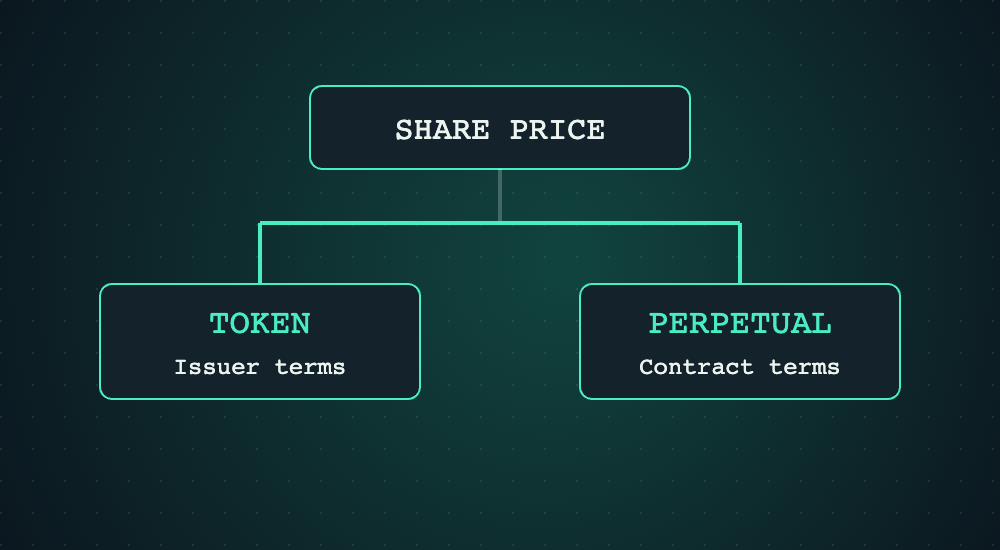
Coinbase reported on October 29, 2026 that tokenized stock trading volume on Base had passed $1 billion since launch. Earlier in the year, Kraken announced perpetual futures tied to equity benchmarks through its xStocks framework. Both developments bring stock prices onto crypto trading screens. They also make the product name as important as the ticker. Coinbase Q3 results · Kraken’s February 24 launch announcement
Start with what the holder can claim
For an equity-linked token, read the issuer’s terms for the underlying asset, custody, redemption and treatment of dividends. Seeing a familiar company name on screen cannot tell you which shareholder rights, if any, transfer to the token holder. Two products tracking the same share can have different issuers and different terms.
Read a perpetual as a contract
A perpetual futures position gives exposure to price changes through a derivatives contract. In Kraken’s launch, eligible clients could take exposure to equity benchmarks around the clock. To understand a position, identify the reference price, funding mechanism and margin rules. Those details matter even when the quoted price looks close to the share price. Kraken’s product announcement
Put the volume figure in context
Imagine a token changes hands ten times at $100. Those trades produce $1,000 of turnover from a single token. The same distinction applies to cumulative exchange figures. Trading volume since launch measures activity over a period. To learn how much of an asset exists, you need a separate supply or holdings figure.